Thursday, August 31, 2006

Roadie Report 17 - The Rock Bottom Remainders- by Camilla McGuinn


The sun was shining and the cars were speeding as we traveled south on interstate 5 to join The Rock Bottom Remainders in Los Angeles for a fund raiser concert to benefit 826LA, a non-profit organization dedicated to helping students explore their creative writing skills.
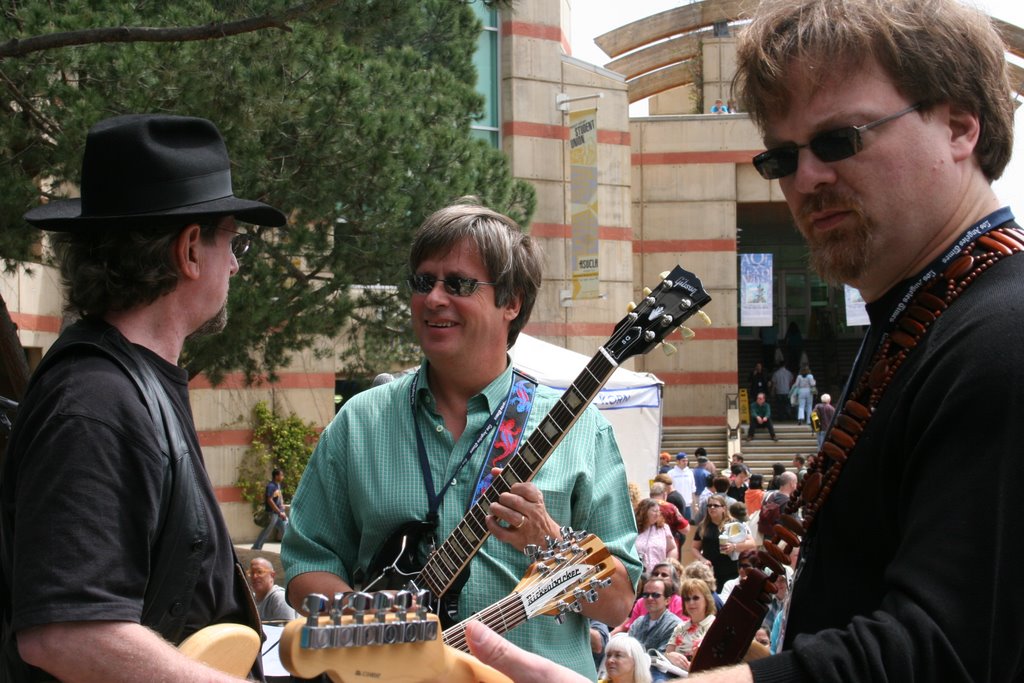
Roger, Dave and Greg at sound check.


The members of "The Rock Bottom Remainders” are probably some of the most affluent band members in the world; of course that’s not too hard to do since the majority of musicians live hand to mouth. Their prosperity isn’t because of the group’s guitar techniques, platinum discs, or wonderful voices; it’s their talent for making the public hunger for words that transport their readers to a different dimension, intrigue them with a mystery, give insights into a cultural life style or make a person laugh out loud. These folks are writers. Dave Barry, Ridley Pearson, Mitch Albom, Amy Tan, Greg Iles, Scott Turow and Kathy Goldmark make up the core of the band with Stephen King joining in whenever his schedule allows. Every city stage where the band performs is graced with guest authors who, like all the others, had always wanted to be a rock ‘n’ roll star.

The odyssey of the group began when Kathi Goldmark worked with various authors during their promotional book tours. She began to notice an interesting common thread; there were a lot of writers who played in bands before their careers as authors took hold of their destinies. Kathy played in a band herself and thought that putting these talented people together to live out their musical fantasies would be a lot of fun.
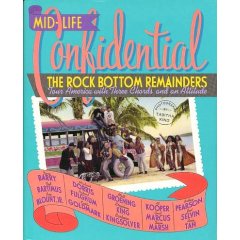
They wrote a book about the early days, so I won’t go into their whole story. The book is called, “Mid-life Confidential: The Rock Bottom Remainders Tour America with Three Chords and an Attitude”


I will tell the story of how Roger became a guest musician with the “Rock Bottom Remainders.”

2001:

Early in March 2001, within a week, we received two copies of the same book from different friends. The book was “Sick Puppy” by Carl Hiaasen. We weren’t exactly sure why our friends thought it was important that we have a copy of this book with a strange title, but we trusted them and settled down to explore the pages for a clue as to why we'd received these gifts.

The story takes place in Florida. That was a clue. We have lived in Florida since 1984, so maybe that was why our friends sent the books. But on page 50, I was victorious! I quickly ran into Roger’s office and excitedly demanded, ”Listen to this!”

“The dog settled in at his feet. Twilly patted its glossy rump and said, 'Everything’s going to be all right buddy.' He couldn’t bring himself to address the animal by the name on its tag---Boodle. It was a quaint synonym for bribe, Palmer Stoat at his wittiest.
'From now on,' Twilly said to the dog, 'you’re McGuinn.'
The Lab raised its head, which seemed as wide as an anvil. 'After a great guitar player,' Twilly explained.”

We were both pleasantly bewildered. We still weren’t sure if the author actually meant Roger, so we kept reading. On page 54, we had confirmation, “After a musician I’m fond of, Roger McGuinn.”

We had never met Carl Hiaasen and I’m embarrassed to admit had never read any of his books. It didn’t take long for us to finish this novel about an eccentric environmentalist’s personal capers against the greedy developers who were plundering Florida’s environment.

A few days later, as I was perusing the Orlando Sentinel, I noticed an advertisement for the book “Sick Puppy” which had a notice that the author, Carl Hiassen, would be signing autographs of the book that evening in Winter Park. That’s when I hatched what I thought would be a fun caper of our own.

I suggested to Roger that we go to the bookstore with a copy of the book and ask him to autograph it to “Roger.” Then we would see if Carl would recognize who was asking for the autograph. My enthusiasm was infectious so Roger went along with the plot.

We arrived at the bookstore by 7pm and as we walked into the store my brilliant idea started to look a little less clever. There were about 100 people standing in line for an autograph. The drive to Winter Park had taken over 45 minutes, so we were committed. We took our place in line and waited.

I tried to avoid looking up at Roger because every time I did he had the same look that Ricky Ricardo (Desi Arnez) used to give Lucy (Lucille Ball) whenever she got him involved in a feathered-brained scheme. I could imagined hearing Roger imitating Ricky’s Cuban accent saying, “LU..CY” but with “CA..MILL..A” being the name called to give an explanation.

Well, we were in a bookstore, so I smiled bravely and said I needed to find a book and left Roger stoically standing in line.

As I studied the books on the shelves, I would occasionally look in his direction. All of a sudden, he was talking to a lady and I could tell he was looking around for me. I immediately went to his side.

The lady was from the Orlando Sentinel and she had recognized Roger. Evidently she had actually read the book and wanted to get a picture of Roger and Carl together, but her photographer had to leave for another assignment. She asked if Roger would mind going to the front of the line. I was saved!

She introduced Roger to Carl, so my plot didn’t come off exactly as I had envisioned it, but the signs of a Cuban accent were disappearing from Roger’s countenance. Carl seemed a little embarrassed when he shook Roger’s hand. They talked for a few minutes, but the line was long, so Carl suggested that we get together the next night at a dinner where he was a guest speaker. He did sign our copy of the book before we left,
“For Roger and Camilla - With admiration from a real sick puppy! Carl Hiassen.”

The next evening, we drove to the Disney hotel where Carl was speaking. He had arranged for us to join his publisher’s table for the dinner and after Carl gave his humorous speech, the three of us were able to get away by ourselves. We were like old friends at a reunion. During the conversation Carl told us about “The Rock Bottom Remainders.” Roger loved the concept of the band. Carl said he would call Dave Barry and ask him if Roger could play with the group during one of their concerts.

Well the rest is history. Roger has played with the “Remainders" for over five years now, whenever their schedules connect.

Dave and the members of the group often make disparaging remarks about their musicianship, but actually they're not bad. In fact Roger asked them to record “The John B’s Sails” with him on the Folk Den. They recorded it at the beginning of a 2004 “Remainders” tour.


2004:

We were all gathering in St. Louis and the day before the rehearsals were to start, Ridley Pearson invited all who had gotten into town early to have dinner at his home. Roger immediately drafted the dinner guests, Dave, Ridley and Greg Iles, to sing into his laptop computer. They rehearsed the songs a few times, and then Roger turned on his computer. After the song, Dave started talking and Roger informed him, that he was being recorded. Roger left Dave's remarks on the final mix of the recording.

Dave, Roger and Ridley listening to "The John B's Sails" (photo by Marcelle Pearson)

You can hear this recording and Dave’s surprise reaction on THE FOLK DEN. This recording is also on The Folk Den Project.

2006:
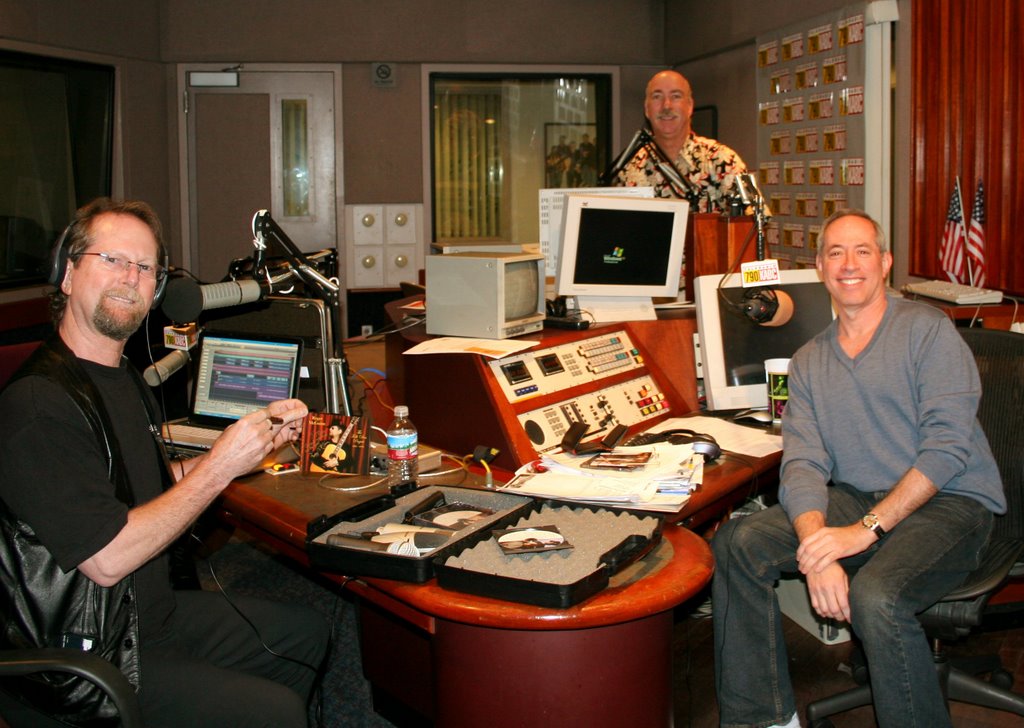
We arrived in Los Angeles, a few days before the Remainders in time for Roger to be a guest on two radio shows. Marc Cohen, KABC Computers and Technology Show, was excited that Roger was recording on computers and asked him to join him and Mark Olleesky for the full Saturday show from 9am-11am. Technology and music – two joys of Roger’s work.


Roger also joined guest “Remainder,” Frank McCourt at the radio station KPCC. Frank had not planned to sing during the interview, but when Roger started playing “Finnegan’s Wake” Frank’s weariness from his airplane ride disappeared and the sounds of a joyous leprechaun sprang from his lips.

A dear friend invited us to stay at his house while we were in Los Angeles. Roger and I had spent many nights there and referred to it as “Camp Beverly Hills,” since we used to camp in our VW Vanagan parked on his driveway. Two other friends were visiting at the same time. The lady, Sonnet, is a singer, and since it was time for the monthly Folk Den song, Roger drafted Sonnet. They talked for awhile about which song to do and she mentioned that her mother used to sing her the old Irish song, “Molly Malone.” Another friend had emailed Roger a month earlier and suggested the same song. All the signs suggested that "Molly Malone" would be the song of the month.


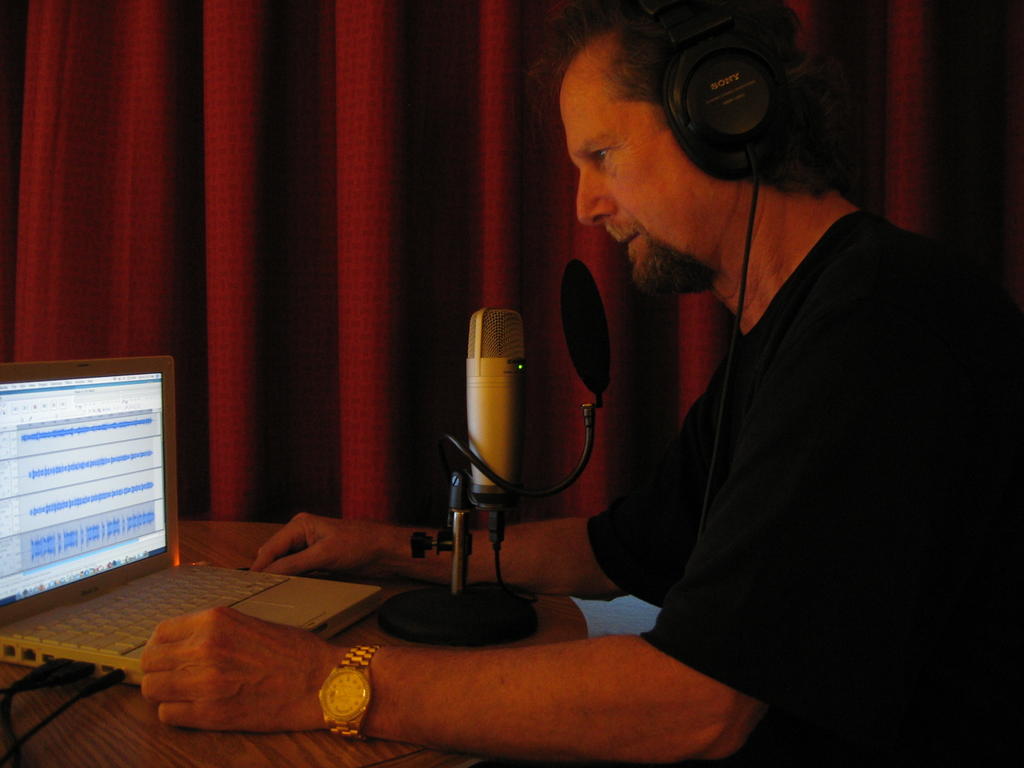
Roger used gaffer’s tape to mount his Samson CL-8 Condenser microphone to an upright lamp stand. He then turned on his computer, plugged in his Rickenbacker and began the recording. After recording the electric and acoustic guitars, he sang the song. Then Sonnet became the voice of Molly Malone singing “Cockles and Muscles, alive alive O!”

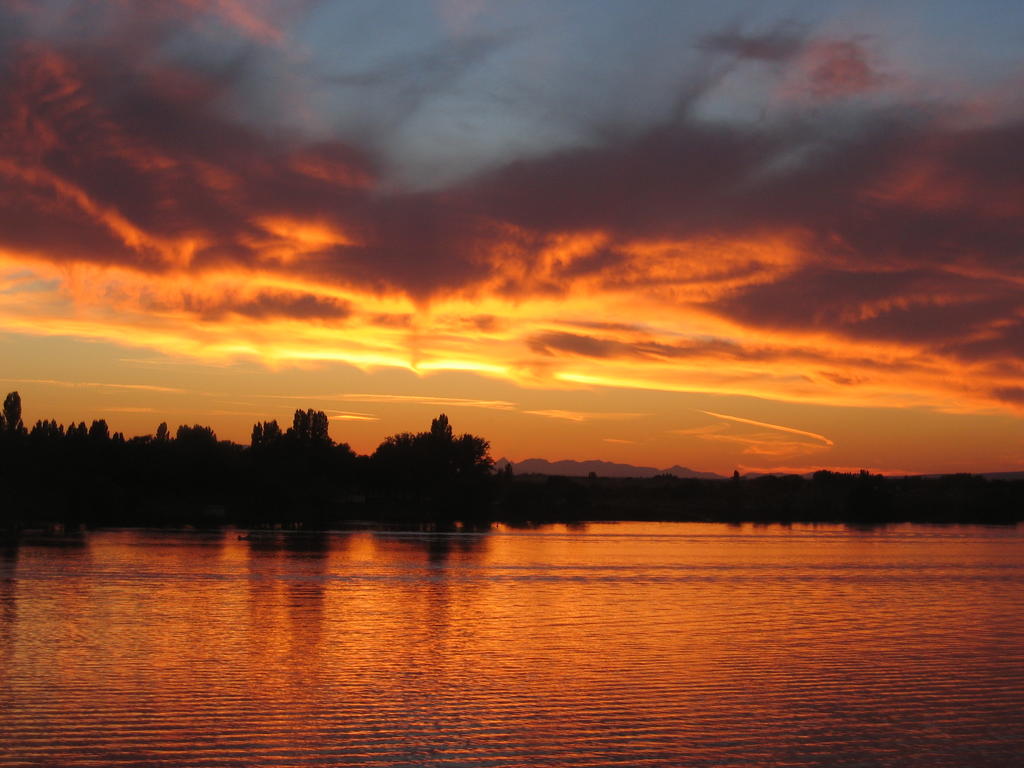
It doesn’t matter where a tour ends, the day the last concert is over; we become like horses running back to the stall. And so it was after The Rock Bottom Remainders concert, we arose early in the morning and began the 2523-mile trip from Benedict Canyon, CA to Orlando, FL with a stop in Tucson to hug the “Special Lady."

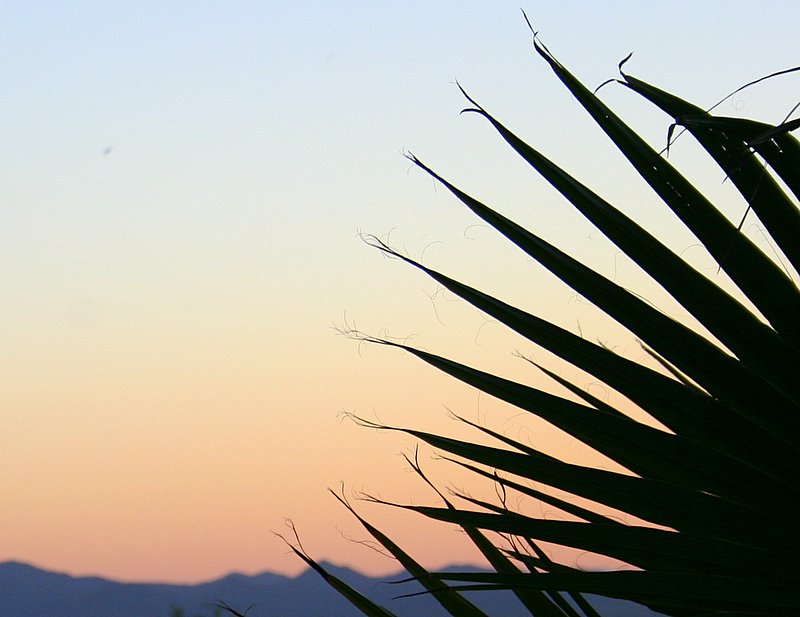
Desert Sunset (photo by Camilla)


Next month, I will continue the story of McGuinn and The Chad Mitchell Trio.

email the roadie at roadiereport@folkden.com

Monday, July 31, 2006

Roadie Report 16-Jim McGuinn's First San Francisco Visit- by Camilla McGuinn

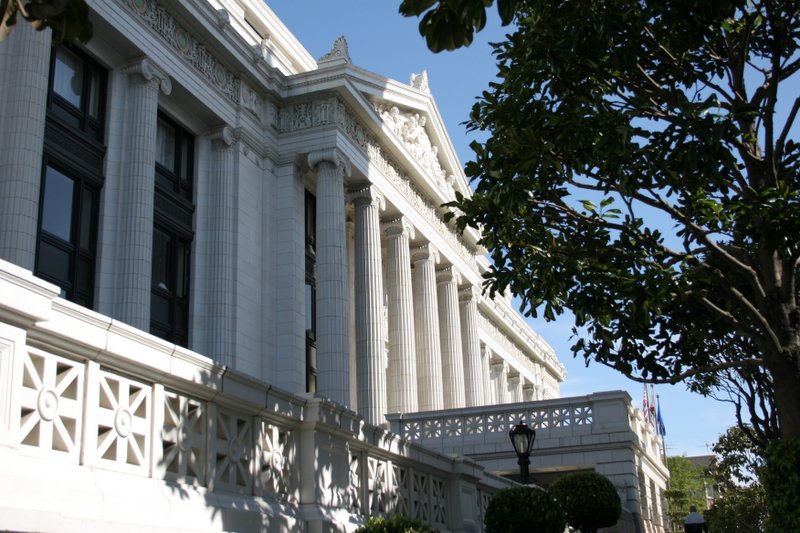
The Ritz Carlton (Photo by Camilla)

San Francisco is one of our favorite cities but it’s a difficult city to drive and park in. Finding a hotel that can accommodate our van is a priority when we have business in that rolling city. After a few years of trial and error, we found that the Ritz Carlton not only would park our Ford van, they did so with as much aplomb as they do with the luxury cars that grace their portal. The doormen recognize our van now. When one of them said, “Welcome back.” I asked if he really recognized us or was he just being polite. He said, ”Indeed I do. You have a lot of equipment to unload.” It wasn’t my smiling face, or a renowned 12-string guitar player that made an impression – it was two luggage carts filled to the top with stuff!

We had several appointments during the next few days and the first one, was a visit with Steve Wozniak.

Roger and Woz began communicating after Steve read about Roger’s Senate testimony in defense of MP3.com. That statement can be read at http://judiciary.senate.gov/testimony.cfm?id=195&wit_id=253 . Roger was thrilled to be emailing the inventor of the Apple computer and a fast friendship developed between the two techies. A few years ago, we were delighted to be invited to join Woz on one of his jaunts to Japan to comb the shops for new inventions.

Steve made a special trip into town to join us for an evening of new gadgets and toys. The two Steves (Wozniak and Jobs) enjoyed a youth of pranks and gadgets. Woz still follows those pursuits. He brought a bag of toys and we spent hours trying to figure them out in the lounge of the Ritz Carlton.

The Glaucoma Research Foundation was holding their annual Board of Directors meeting and asked Roger to perform. Before the performance we were encouraged to hear the updates about the ongoing research for a cure for Glaucoma. This is a good time to remind you to have your eyes checked yearly. Glaucoma can cause blindness before you know you have the disease and there is no cure after the damage has been done.

We had one day off to do what we love to do in San Francisco – walk. I always lose weight as we walk up and down those amazing hills, but then I put it back on when we feast on the wonderful food available all over the city. We walked to North Beach, had lunch in an Italian restaurant, and while waiting for the fried Calamari, Roger told me about the night in 1960 when the bus pulled into San Francisco.

1960: (Roger is called Jim)

The night before Jim was to catch the bus to San Francisco, the fraternity boys insisted they have an all night party. In the morning they drove Jim to the bus stop and a groggy 18-year old climbed aboard the bus. The bus broke down half way up the coast and it took hours for a replacement to be dispatched to take the travelers to their destination. At midnight, the second bus finally arrived in San Francisco. Jim was slightly hung over, slightly sick from the smell of the diesel fumes and he had no idea where to go.

He reached in his pocket for the matchbook cover that Lou Gottleib had given him with a telephone number scribble on the inside. Lou had said to call if he was ever was in San Francisco and maybe there would be some more work. Jim dialed the number and heard a disconnect recording. His spirit was disheartened and his stomach queasy. All he wanted was a bed.

McGuinn was a city boy, so taxis were the logical way to get anywhere. He got into a cab and told the driver his friend’s telephone number was disconnected and he didn’t know where to go. The cab driver said he would take him to a good hotel. After driving a few blocks, the driver stopped and pointed at a door. Jim paid the fare, gathered his belongings and stood looking at the hotel. He turned to look across the street and noticed the bus station. The city boy had been taken for a ride.

There was a room available at the old hotel. When he walked into the room, he fell onto the security of the lumpy mattress without even undressing. His eyes finally opened at noon and as he squinted at the unfamiliar surroundings, he asked himself a question that would become a familiar morning inquiry for the rest of his life, “Where am I?” Then the memory of the horrendous bus trip, the disconnected telephone and the flaky cab ride came rushing back, but in the morning light, it didn’t seem so bad. He was in San Francisco and he was going to find the "Hungry i."

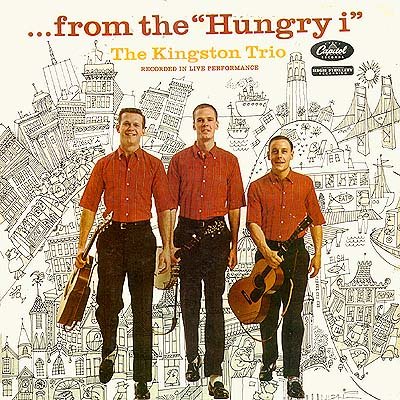
The "Hungry i" was the San Francisco equivalent to The Gate of Horn in Chicago. Jim had heard of it from the folk singers that played at The Gate of Horn. The folk community was small and the players all knew each other and played the same venues. He expected the "Hungry i" would be the place to find the next door on the pathway of his life. After a quick shower, he once again caught a taxi. This time he asked to be driven to "The Hungry i."

The "Hungry i" was a club where folk singers hung out and played guitar during the day and watched real performers at night. Jim walked in, surveyed the situation and decided to come back the next day with his guitar.

San Francisco was a city to explore, so he left the club in search of some food and to get a sense of what the city was all about. After a quick bite and blocks of walking the steep inclines of the San Francisco streets, he saw a theater advertising, “Psycho.” Alfred Hitchcock’s new movie was showing and it was time to rest his weary legs. Hitchcock’s suspenseful story filled Jim’s mind as he walked back to the hotel after the viewing. The strangeness of this new city and the uncertainly of things to come was creating his own suspense movie and one that he hoped had a happier ending.

The next few days were spent at the "Hungry i" playing guitar and meeting the locals. Adam Yagodka, a song writing partner of The Kingston Trio's Nick Reynolds, became aware that Jim was living in a hotel room and invited him to stay with him at his uncle’s house in San Rafael, while his uncle was in Europe.

Adam took Jim under his wing, introduced him to Nick Reynolds and suggested that Jim audition for the position being vacated by Dave Guard, the founder of The Kingston Trio. Nick drove him to the audition in his new red Ferrari. Bob Shane, Nick's partner, thought that even though Jim’s guitar playing was good, his voice wasn’t as strong as they wanted for their trio.

Another milestone that Adam brought into Jim’s life, was his first taste of marijuana. “You’re starting on the good stuff kid. Gunja.” The few weeks living in San Rafael was a laid back time. Adam’s uncle returned from Europe, so Adam, his girlfriend and Jim moved to her apartment in Sausalito.

Living in Sausalito was fun, but the commute to the "Hungry i" and the music scene was difficult. Jim met a musician named Don who invited him to crash at his house in South San Francisco. He and Don formed a group and played at places on Fisherman’s Wharf for a few weeks.

Afternoons before their shows, Jim was hanging out at the "Hungry i." One day the bartender gave him a message. Frank Fried, a Chicago promoter, was looking for him. Frank knew Jim’s parents, but they weren’t sure how to contact him except that he was in San Francisco. Frank called the "Hungry i." In the folk community at that time, word of mouth was an effective way to find people.

Jim placed a collect call to Chicago and Frank told him that Chad Mitchell wanted to hire him. Jim told Frank that he was forming a group in San Francisco, but Frank convinced him that working with Chad Mitchell was the next step he should pursue in his career. Frank sent Jim an airplane ticket and within the month, Jim walked off the airplane at Idlewild Airport and shook hands with Chad Mitchell.


2006:
We had an early call in the morning for a live radio interview with KFRC-FM, The Cammy and Dean Morning Show. While I was working on promotion for THE FOLK DEN PROJECT and the concert scheduled in Montalvo, I came across Cammy’s name and thought, ‘Hey that’s my name!’ Or at least it was the name I used from the ages of thirteen to nineteen. Since we obviously had something in common, I emailed her. Fortunately, she had heard of Roger McGuinn and said they would love to have Roger as a guest on their show. This is a fine example of how scientific I am at promotion

We walked out of the door of the Ritz Carlton and asked the doorman to call us a taxi, a McGuinn San Francisco tradition. He said that there was no need because their car would drive us to the radio station. Those full luggage carts at check-in had made a big impression.

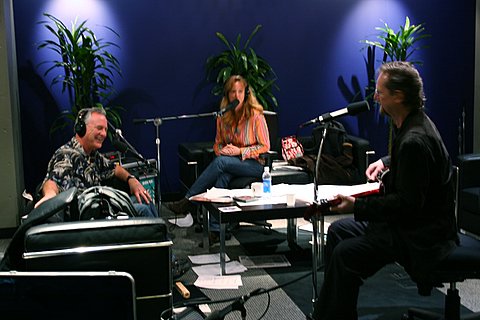
"Cammy and Dean Show" (Photo by Camilla)

The Montalvo Carriage House Theater show was already sold out, so this radio interview was more about music and fun. Roger played Cammy and Dean’s favorite songs live, showed them his 7-string guitar and signed Dean’s Rickenbacker. (Photo by Camilla)

We returned to the hotel, checked out and joined the Friday traffic moving south out of the city. In all the years we both lived in California, we had never been to the Silicon Valley town of Los Gatos. I think the citizens keep the town a secret because it is an oasis beautifully situated by a mountain. The streets have the feel of another era but lined with all the trendy shops of our day. And yes, they do have a great sushi bar! Our senses were quieted by the serenity of the small town after the three days of San Francisco excitement.

The concert in the Montalvo Carriage House Theater was performed to a wonderful appreciative audience. We even got one more chance to see Woz. He had a Segway polo tournament during the day, but he made it to the concert in time with the Segways in the back of the Hummer.

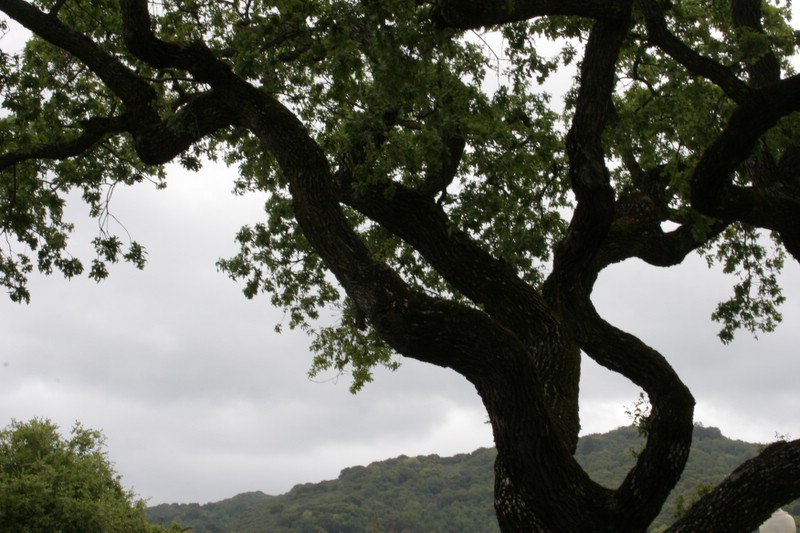
We enjoyed Los Gatos, so before we headed south to Los Angeles to join the world famous "Rock Bottom Remainders",we spent an extra day walking the small town and enjoying lunch in the shelter of a tree.

(Photo by Camilla)

Thursday, July 06, 2006

Roadie Report 15 - Jim McGuinn Meets David Crosby - by Camilla McGuinn

Moonstone Beach, Cambria (Photo by Camilla)


We left Aspen and headed to San Francisco via Morro Bay, Ca.

Morro Bay had been our home from 1980 to 1984 and we always enjoyed a chance to stop, soak in the sights and sounds of that small fishing town, while saying hi to the people who made our sojourn there a beautiful chapter in our lives.

Our first glimpse of the California coastline was shrouded by the fog rolling in over Moonstone Beach in Cambria. It was nearly sunset, so we found a quaint seaside motel on Moonstone Beach Drive right next to a restaurant that we used to frequent, the Sea Chest.

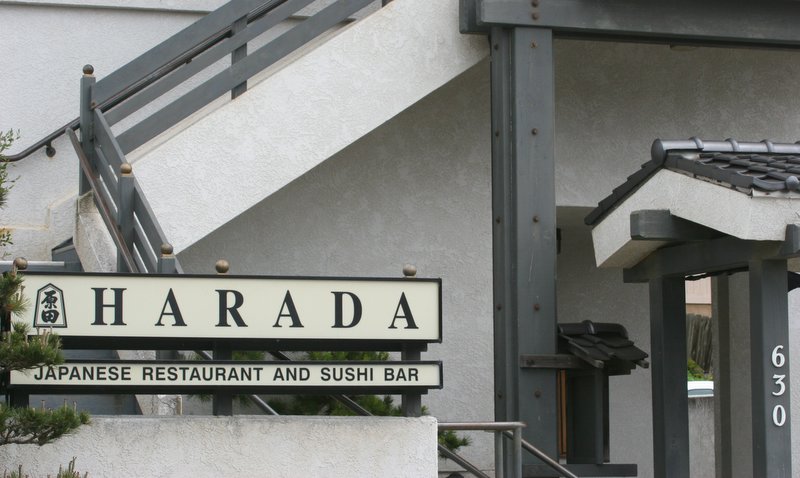
We appreciated the sounds of the beach the next morning, then made our way to Morro Bay just as the lunch hour was winding down. It was wonderful to walk into Harada’s Sushi bar and to see Harada alone, busily preparing for the evening rush.

1984:
Harada had opened his first restaurant in a small building at the end of the embarcadero around 1982. Dinner there was our first priority whenever we came off the road. After one tour, before we even went home, we stopped in for our favorite food. We surprised ourselves by ordering a sushi boat, which was an awesome order for just two people, but we were excited about our recent trip to Florida and wanted to talk about the possibility of moving there.

We were the only people dining at 5pm and as we waited for Harada to prepare the sushi boat, a motorcyle rider walked into the tiny restaurant and sat down at the bar. Roger’s back was toward the door and he quietly asked me why I was looking so intently at the new patron. I felt like I knew the motorcyclist and asked Roger to turn around and see if he did. Yep, he did. It was Kurt Russell. Roger had a curious connection with Kurt - Kurt had married Roger’s ex-fiancee. So Roger walked over to Kurt, introduced himself and invited him to join us. Then we knew why we had ordered that big sushi boat!

After dinner, Kurt came to our home and played banjo with Roger. His enthusiasm was so delightful; I forgot that he was a famous movie star. The night was getting late and we tried to talk him into spending the evening. I was concerned about him driving back to Los Angeles in the dark on his motorcycle, but he wanted to be home in time to pick up his son in the morning. I suggested that maybe his girlfriend that he had mentioned earlier, could pick up Boston, his son. He smiled and asked, “Do you know who my girlfriend is?” We both shook our heads - we very seldom read the magazines that kept people abreast of famous relationships - and when he said, “Goldie Hawn,” I replied, “Well she seems nice, can’t she pick him up?” He laughed, picked up his helmet and rode into the night. We started laughing too. Imagining Goldie Hawn standing at the door of her boyfriend's ex-wife was funny.


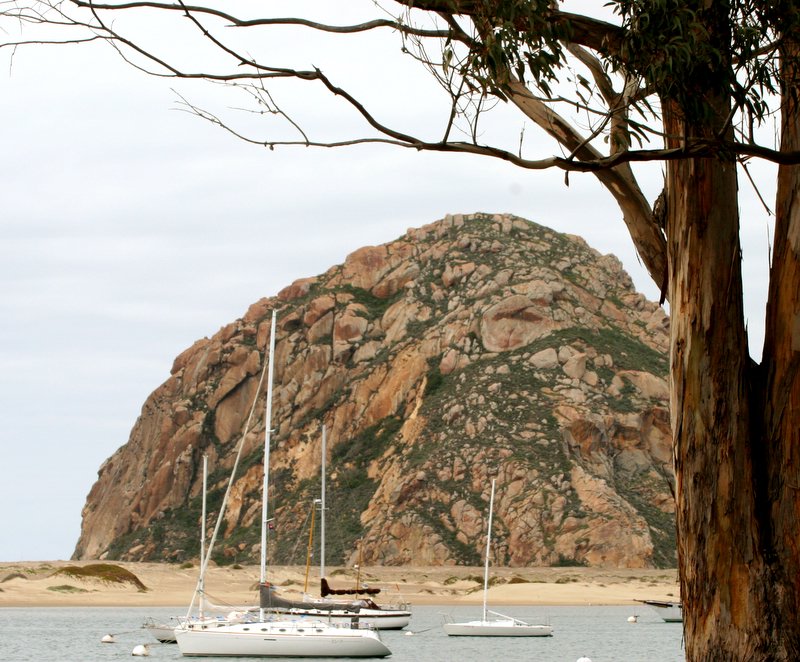
The Rock at Morro Bay (Photo by Camilla)


2006:
The neighbors in Morro Bay who cared for us as surrogate parents were Susie and Stan. Their zest for living was an inspiration and they were the ones who fed the cat that had adopted us, paid our bills, picked up our mail and kept the home fires burning for us while we were on the road, all those Morro Bay years. Stan passed away last year, so there was a moment of sadness as we knocked on Susie’s door, knowing it would just be her. Susie’s sense of humor was beautifully intact and we had a wonderful evening with her.

The next day we headed up Highway 101 to San Francisco. We had thought about taking Highway 1, but it was closed due to washed out roads from the recent storms. On the way to San Francisco, Roger told me about his first trip to the City by the Bay:

1960:
While Jim (Roger) McGuinn was accompanying the Limeliters at the Ash Grove, a 19-year-old hopeful actor introduced himself. His name was David Crosby and he had just finished acting in a play at the Ashgrove the week before the Limeliters’ appearance.

David suggested that he and Jim hang out together and offered to pick him up at the Park Sunset hotel. David had a convertible in which he had installed aircraft seat-belts. Very few cars had seat belts then and David was very proud of the addition he had made to his car. Over the next week, Jim taught David a few guitar chords and David taught Jim how to drive.

Jim was a Chicago city boy where cars weren’t really necessary. Learning to drive David’s chevy with a manual transmission was the first clue Jim had of David’s sense of humor. After a few times around Santa Monica Blvd, David had Jim drive up the steep hill of La Cienaga Blvd. For a novice at the clutch, it was a baptism by fire.

The Limeliters finished their Los Angeles gigs and told Jim to look them up if he was ever in San Francisco. David suggested that Jim go home with him to Santa Barbara. When they arrived at David’s mother’s house, she made them the most exotic sandwiches Jim had ever tasted, lamb and avocado. Southern California was indeed different from Chicago.

Jim stayed at the Crosby’s for a few days, then David found him
a room at a nearby house filled with fraternity boys from Cornell University. Mornings started with the frat boys "breakfast of champions" -Coors beer. After breakfast they would crash the private beach of the Miramar Hotel. Their nights were spent drinking gin and tonics with the Santa Barbara society scene. Jim lost his wallet at the Miramar beach and was shocked to find it at the front desk with all his money still in it. Southern California was indeed different from Chicago.

The beach and the parties were fun, but Jim came to California to work, so he caught a bus to San Francisco. While Jim was seeking his destiny, Chris Hillman was in high school and practicing his mandolin when he wasn't tending to chores on the family ranch in Northern San Diego County. Jim Dickson was working on feature films, working for Benny Shapiro at the Club Renaissance and keeping his hand on the beat of the music of the times.

Monday, May 29, 2006

Roadie Report 14 - Jim McGuinn With Eartha Kitt and Jim Dickson's Early Days -by Camilla McGuinn

Cedar Falls, Iowa (photo by Camilla)
On April 3, 2006 we hit the road for Cedar Falls, Iowa. On the trek northward we played dodgeball with tornadic storm systems that were wrecking havoc throughout the country.


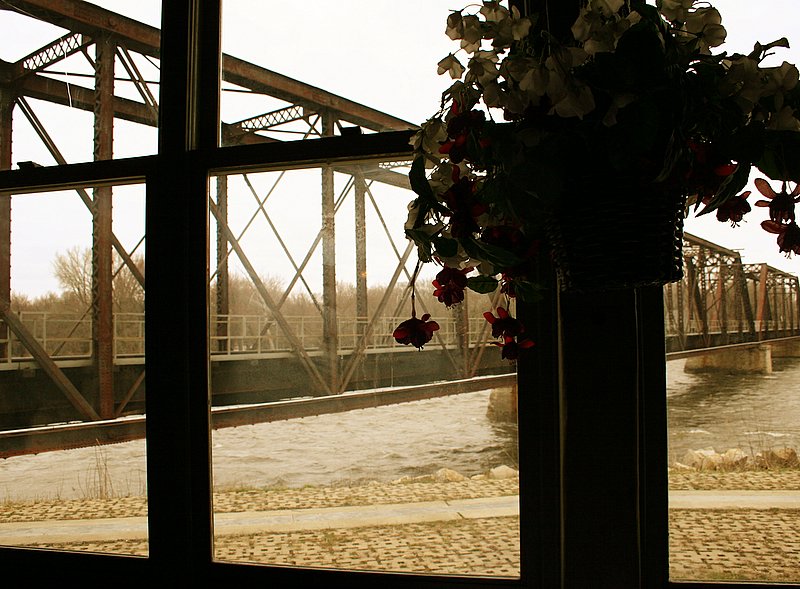
Lunch by the River (photo by Camilla)

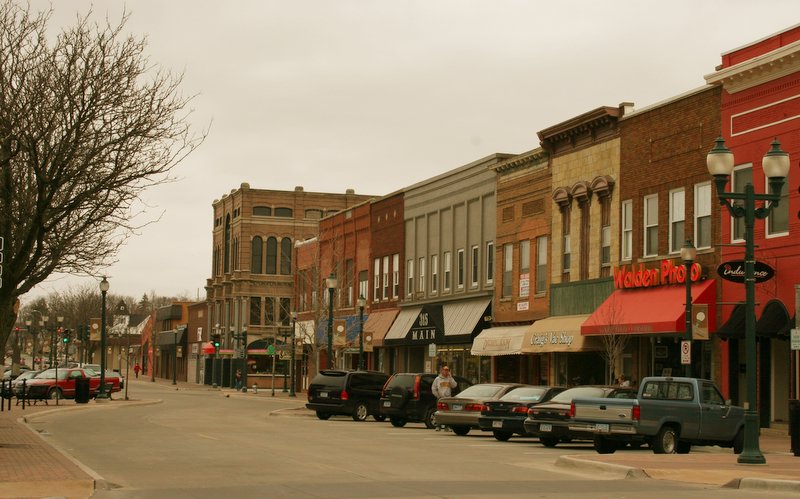
The Oyster Theater, the concert venue for that evening, is located on Main Street in Cedar Falls. We arrived the day of the show just in time for a river-view lunch at the Broom Factory restaurant. After lunch I meandered down Main Street, stopping at the antique stores and finding myself impressed with the charm of the small Iowa town.

The next day we headed west, keeping an eye on the weather. We had already crossed the Donner Pass in California during a snowstorm and didn’t relish repeating that experience, so we decided at the split between Interstates 76 and 80 that we would take a southern route to San Francisco.

Since the weather took us on I-70 past the Aspen, Colorado exit, we decided to detour there and see if The Limelite Inn, the club where The Limeliters began their career was still standing.


On July 13, 1960, Jim McGuinn celebrated his 18th birthday at the Ash Grove folk club in Los Angeles in the dressing room he shared with his bosses, The Limeliters. The waitresses bought him a cupcake with a candle and sang him an off key version of “Happy Birthday.”

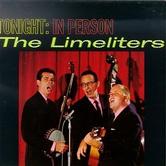
After the birthday celebration, he took the stage with the Limeliters and finished recording “TONIGHT IN PERSON,” a live album and the first for the Limeliters on RCA.
A week later The Limeliters were the opening act for Eartha Kitt at the Hollywood Bowl. Jim had to use his paycheck to rent a tuxedo to wear for the prestigious concert. The night of the concert, as he nervously stood on the wings of the stage tuning his guitar, he felt a slap on his bottom and a sultry voice saying, “Go get ‘em kid!” That swat and that voice were encouragements from Miss Eartha Kitt. Jim was thrilled with his initiation into the world of show business. He still remembers thinking, “This is what I want to do forever!”

While Jim McGuinn was making his entrance into the professional world of music, Jim Dickson was busy recording at World Pacific Studios.

The middle child of James and Ruth Ferne Mullinix Dickson, Jim Dickson was born in 1931 in Los Angeles, California. The Dicksons were an unusal and adventurous family. James designed cars, diesel engines for the Navy and sailboats. Ruth Dickson was an executive for the financial firm Witter & CO , which was later renamed Dean Witter . Her position with the firm was an anomaly for a woman in 1925.

Young Jim Dickson quit school and with his parents permission joined the Army in 1946. The army made him a member of the Military Police and sent him to Japan. From there he traveled from adventure to adventure, exploring New York City then back to his native California. The direction of his life changed when he and his sailing partner, Peter Grant, met the comedian, Lord Buckley.

Lord Buckley had a reputation as a charmer and convinced Peter to finance and produce a recording of Buckley’s comedic act. When Peter realized how easily he was manipulated, he sailed away to Acapulco and left Dickson to produce the album.

Dickson opened the telephone book’s Yellow Pages to “recording,” and found a studio called CP McGregor. The yellow page advertisement said they had 25 years experience, which was mostly in religious transcriptions for radio broadcast. At the studio he met, George Jones, a gentleman who later became head of the custom department at Capitol Records. George spent several hours explaining the record business to Jim. Dickson remembers Mr. Jones as “the honest man” he met in the record biz.

DianeVarsi


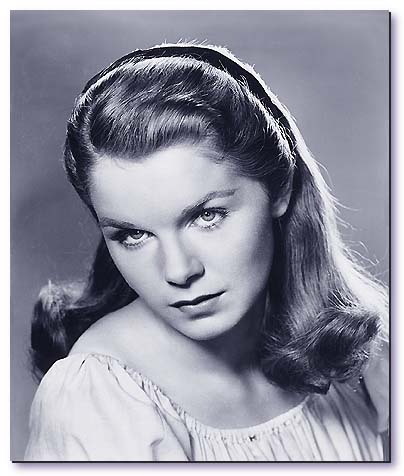
Armed with advice, a studio and Lord Buckley, Dickson began his career as a record producer and a recording label owner. Lord Buckley suggested he call the label “VAYA,” after the then popular saying, “Vaya Con Dios.” The Lord Buckly experience not only set him on the pathway of his life long career, it opened the door to the Hollywood bohemian artist scene where he fell in love with and married the beautiful folk singer turned actress Diane Varsi.


Our timing for stopping in Aspen was perfect. There was still snow on the mountains, the restaurants were still open, the hotel room rates were lowered and the streets were empty. It was a good thing that we stopped by the old Limelite Inn because we found out from a gentleman who had been coming to the Inn since 1959 that it is slated for demolition. A new hotel will be built in its place.

Aspen in April (photos by Camilla)

Thursday, May 04, 2006

Eddie Tickner ( Oct 18,1927 - May 2, 2006)

A May Sunset in Tucson (Photo by Camilla)


“To every thing there is a season, and a time to every purpose under heaven:
A time to be born, and a time to die;…” Ecclesiastes 3:1,2

Early in May 2006, Eddie Tickner, a manager and mentor of the BYRDS died quietly in Tucson Arizona. Our prayers and tears are with his family.

Thursday, April 20, 2006

Roadie Report 13- The Launch Of THE FOLK DEN PROJECT and the Designing of the new RM D7- 7 String Guitar- by Camilla McGuinn

We quietly launched THE FOLK DEN PROJECT in November. Roger had a concert in Erie, Pa and the first person to buy the box set was a fan who had traveled over 100 miles to see Roger perform. He walked into the lobby of the Mercyhurst College Theater while I was still in the process of arranging my “lemonade stand.” He had read about THE FOLK DEN PROJECT on mcguinn.com and was thrilled that we had autographed copies available. I usually don’t pose for pictures, but he was the first person to buy the new 4 CD set from me, so I was just as excited as he was and happily smiled for his camera.

Presque Isle State Park Photo by Camilla

The day after the concert, we drove around Erie and visited the Presque Isle State Park. Then we drove to Ohio to spend Thanksgiving Day with a reunion of dear friends at Farm Niente. For years we had a hosted a three-day Thanksgiving celebration at our home in Orlando, but a few years ago, we stopped for awhile. I found myself spending most of the year thinking about the details of the celebration and realized that I needed to take a break. Our friends, Linda and Bill, decided it was time to bring us all back together again and opened their wonderful log cabin to the gathering of the friends. The three days with these folks filled our hearts and renewed our spirits with the special feeling that only dear ones can bring.

After Thanksgiving, Roger and I headed to Chicago for what we were calling the official release of THE FOLK DEN PROJECT. We had already released it to the fans of mcguinn.com, the concert in Erie, Pa and to all our friends at Farm Niente. We didn’t even do the publicity thing that traditional record labels do, we just said, “Here it is.” We did feel that to be able to say this special project was officially released at the alma mater of Roger’s education in the folk tradition sounded a tolling of the bells that justified pursuing the concert date in Chicago.

I spent the rest of the holiday season sending out THE PROJECT to press and radio. We realized that 100 folk songs might not sound too interesting to people, so we were very selective as to whom the copies were sent. One of the recipients was a DJ and long time friend, Pete Fornatelle.

Pete had been a DJ on WNEW at the time when DJs, not computers and corporations, spoke to the hearts of radio listeners. His show “Mixed Bag” was started when Roger came to his studio with a guitar and played songs live on the air. Every year when Roger would have a concert within radio range of New York City, Pete would invite Roger to his show for “The Annual Roger McGuinn Update” and all the concerts would sell out within the hour.
Those days of radio have changed, but Pete is still doing what he loves. He now has Mixed Bag, his show on XM Radio (The Loft - Channel 50) and a show on WFUV FM radio in New York.

When Pete listened to THE FOLK DEN PROJECT, he called me and said that he wanted the world to hear it and would get back to me. A few days later he called and told me about a group of people who were desperately trying to keep a platform for performing musicians available to people. They weren’t professional promoters, just lovers of music. Pete asked if we would help them pursue their dreams with a benefit concert that would promote them and THE FOLK DEN PROJECT. The concert was scheduled in a beautiful church in Montclair, NJ and quickly sold out. The night of the concert, after Roger finished singing “So You Want to Be A Rock and Roll Star”, Pete joined him on stage for the taping of “The Annual Roger McGuinn Update,” which was later played on Pete’s radio shows. The warmth and encouragement of the audience was a major part of that lovely evening.

On our way home from New Jersey, we stopped at Martin guitar in Nazareth, Pa for a meeting with Dick Boak. The Roger McGuinn 7-String guitar was a delight to guitar players, but the dealers were begging for one that everyone could afford. We sat down with Dick and designed a guitar that had all the wonderful attributes of the HD 7 but not all the delicate craftsmanship that raised the cost. We were very excited about the design specs that the three of us worked on and are anxiously awaiting the new D7. The beautiful HD 7 with inlaid mother of pearl will still be available, but now there will be a Roger McGuinn D7 that will fit the wallets of those wonderful musicians who want the joy of playing that double “G” string, without the high cost.

As we were leaving the Martin guitar factory, we met a couple in the lobby who had been at the concert the night before in Montclair. They said the whole town was buzzing about the concert and they had a hard time grasping that they were now talking to Roger face to face. We were all blessed by the serendipity of that chance encounter.

The next few months were spent promoting THE FOLK DEN PROJECT and planning for the tour we are now on. The Wall Street Journal, Rolling Stone, some wonderful local newspapers and magazines from Europe all gave THE PROJECT favorable reviews. It was a labor of love and to have a folk collection to even be honored with reviews in major publications has been very humbling and exciting.

GARDEN SUNSET Photo by Camilla

I’m sitting in a hotel in San Francisco listening to jazz. People have emailed and asked when I was going to post another “Roadie Report.” When I am at home I wear a different hat. There is a roof to fix, a courtyard to remodel, taxes to do, roses to plant and garden sunsets to contemplate. I’m not a roadie until the wheels start turning. Since we’re now on the road, I will be writing more about Roger’s memories of his life on the road and some memories from Jim Dickson, the man who guided 4 earnest musicians and a good looking conga player to the top of the pop charts.

Thursday, December 08, 2005

Roadie Report 12 by Camilla (Aug cont. & Jim McGuinn Discovers Folk Music & THE FOLK DEN PROJECT)

We settled into studio B at the Summit Road Studios and began the daunting task of mixing and mastering the 100 songs for THE FOLK DEN PROJECT. We worked 10 hours a day, shoulder to shoulder, fine tuning the recordings. Roger had finished most of the re-recording of the songs that he felt needed it prior to leaving for the Washington State concert.

As I listened to the songs over and over I reflected on what brought Roger to this point in his life and why he has such a passion for preserving the songs we were compiling for this 4 CD box set.

In the winter of 1957, Jim's (Roger’s) music teacher at the Latin School of Chicago, Miss Ganter, invited her friend Bob Gibson to perform for her students. Jim attended out of duty but didn't expect much from another required school assembly. As he was clowning with his group of friends, his eye caught a glimpse of an instrument head stock poking through the door of the auditorium. It appeared to be a guitar and suddenly his interest was peaked.

(Miss Ganter's music class at a student's home. Jim is third from the right.)


Bob Gibson strolled on stage not with a guitar, but with a 5-string long necked banjo. At this revelation, Jim wanted to find the nearest exit, but after only one song of intricate finger picking and a personal story about the song Jim's interest reawakened. He was amazed at the energy and sound that the Banjo created in the hands of an artist who believed in the instrument and the music. Bob finished his set of songs and left the building. Jim immediately found Miss Ganter and interrogated her about the music and style of Bob Gibson.

Miss Ganter told her student that it was folk music and if he was really interested in learning more about it, that a new school had just opened within walking distance of his house, called The Old Town School of Folk Music.

School was not Jim's favorite pastime so he wasn't sure he wanted to attend another school, besides he felt pretty confident about the guitar technique that he had already taught himself. He would buy 45 rpm records, slow them down to 33 rpm and learn the guitar parts by ear.

Now the sound of Gibson's banjo kept ringing in his ears, so the following Saturday he braved the cold Chicago winter winds and walked up to 333 West North Avenue from his home on East Division Street. The School was on the third floor of an old brick building. He climbed the stairs and was greeted by Dawn Greening who introduced him to Win Stracke and Frank Hamilton. Frank asked him if he knew the circle of chords. Jim had no idea what he was talking about but when Frank proceeded to quickly demonstrate an incredible chain of barre chords, Jim realized that he had a lot to learn about the guitar and immediately signed up for classes.

Frank tested Jim's guitar technique and assigned him to the intermediate class. The walls of the classroom were covered with posters with the names of famous guitar players and tablatures showing their individual picking style. He diligently mastered one style every week and was soon moved to the advance guitar class. He also started playing guitar and singing in a trio called “The Frets,” with Johnny Carbo on banjo and Louis MacDonald on congas, at the Café Oblique.


(The Frets)

The strong impact of Bob Gibson's banjo playing was the impetus for Jim to learn the intricacies of the five-string banjo. He didn't have a banjo, so he strung one of his guitars with five strings, put a nail in the neck at the seventh fret and tucked the fifth string under it. He saved his money to buy a Vega long-neck "Pete Seeger Model" banjo. It was Jim's banjo picking technique that would later transform the sound of a Rickenbacker electric 12-string guitar into what would become known as the 'jingle-jangle" sound of the Byrds.

Jim started working as a solo performer at local coffeehouses. Every night after his gig he would head down to Albert Grossman's Gate of Horn, one of the first Folk/Jazz nightclubs in the country. Even though Jim was under the legal drinking age, he managed to get in the door. In 1997 Ella Jenkins told me at a live recording of songs for the Harry Smith Connection on Smithsonian Folkways Records, that she used to tell the bartender, "Let the boy in, he just wants to hear the music." High school was secondary in his life, even to the point of being kicked out of study hall for playing his banjo. Folk Music had become his passion.

One night after his Café Roué gig, he made his usual pilgrimage down the cold windy sidewalks of Rush Street to the Gate of Horn. He entered the bar room and heard the sounds of a jam session going on. It was the Limeliters, Theo Bikel, and some of the regulars. Alex Hassilev, of the Limeliters, looked at the skinny kid holding two instrument cases and told him, "We have enough guitars. Break out your banjo." Jim was in heaven as he played all night with the famous folk singers. Around 4:30am, Alex invited him to audition for them the next day for the position of accompanist and gave him an album. True to Jim's modus operandi, he hurried home and listened to the songs on his record player. At sunrise he was confident he knew them and tried to get some rest before the 1pm audition.

The next day he went to Mr. Kelly's, a Chicago landmark nightclub where the Limeliters were performing, for the audition. Alex liked what he heard and told him the job was his. He asked, "When can you start?" It was then that Jim sheepishly admitted that he had to graduate from high school first.

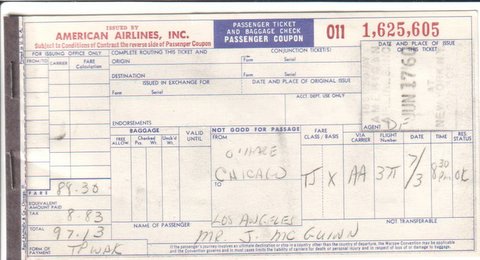
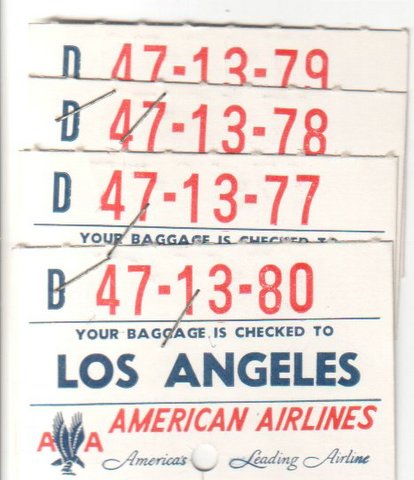
On July 3, 1960, ten days before his 18th birthday, Jim McGuinn boarded an airplane bound for Los Angeles with a ticket the Limeliters had sent him. At the American Airlines ticket counter, he had checked in his Martin 00-21 6-string guitar, his Pete Seeger long-neck banjo and two suitcases filled with his important belongings, half of which were gadgets. Ken Kragen, the Limeliters' manager, picked him up at LAX in a red convertible with the top down and drove him to the Park Sunset hotel on the Sunset Strip. During the drive to the hotel, the warm California night air whipping around his face, the summer scent of the orange trees and the freedom of being on the road captured his heart so much that he knew he would never return to Chicago to live again. His passion and his diligence to learn his craft had opened the doors he had dreamed of walking through, on that day just a year before, when he was kicked out of a study hall in high school for practicing his banjo.

45 years later, I was honored to be sitting and working by his side on this preservation project of the music that mapped the journey of his life.

The intensity of work was lifted every night when we joined Linda and Don DeBey for the evening meal. We didn't want to impose on them, but they always made us feel welcome. The four of us had so much in common. They had met while playing in a band and it is their love of music that had brought them to build the state of the art, Summit Road Studios.

The last night before Roger's Denver concert, Linda and Don made a Thanksgiving style dinner and included Kristy and Ed Edwards, the couple who brought us all together. Roger still had one song he wanted to re-record so after dinner he asked them all to join him in the studio to record "This Train" for the FOLK DEN PROJECT.

We left Linda and Don and the Summit Road Studios on September 25 and headed to Pennsylvania and New York for two more concerts. We listened to all 100 songs while driving the roads of America and watching the seasons change from Summer to Fall. My favorite songs kept changing the more I listened.

THE FOLK DEN PROJECT was almost finished. The 40-page booklet had been sent to press while we were mixing. In order to officially release the Project on the 10th anniversary of the FOLK DEN we had an October 11th deadline to send the master recordings in for pressing. Roger felt that the Old Town School of Folk Music should be the place for the release concert - the place where he developed a love for folk music- so Skyline Music booked the theater in the school for November 27th. Our deadlines were all met.

Update: The Folk Den Project is now finished and is available HERE:

Monday, November 14, 2005

Roadie Report 11 (Aug cont. & Jim McGuinn's First Guitar and Mixing THE FOLK DEN PROJECT) by Camilla McGuinn

(Photo by Camilla)

The stay at the King Estates Vineyard was a delightful respite before our San Francisco engagements. After the Moses Lake concert, it would have been nice to have driven back to Florida and to finish the work on "THE FOLK DEN PROJECT" but Roger had three commitments in San Francisco and all of which were very close to his heart.

Roger's first appearance was on the ground breaking POD cast of "This Week In Tech" aka "TWIT." They were podcasting from the Apple Computer store in San Francisco. TWIT was formed by the staff of the old "Tech TV," a great television network that was bought by Comcast Cable and subsequently ruined. The people who watched Tech TV were very much like Apple Computer fans, deeply devoted. Roger was one of those deeply devoted fans. When it was bought and turned into "G4," a network solely about computer games, a myriad of techies felt betrayed and abandoned. The G4 "suits" didn't realize that the success of Tech TV was based on the commitment and pioneering spirit of the people who hosted the shows. Leo Leporte and Kevin Rose didn't go along with the corporate plan. Leo was fired and Kevin jumped ship. They began their own shows on the Internet, podcasts and IP-TV. Their audience followed them. Kevin's quest for integrity paid off. Podcastingnews.com reported "Kevin Rose gets 2.8 million dollars in venture capital for his online projects." Kevin uses that money to buy the servers and the bandwidth necessary to keep the projects in cyberspace.

While we were driving to Washington, Roger learned of the podcast and emailed Leo. Leo invited Roger to join them at the Apple store and we were excited to hear that John C. Dvorak, author, columnist, editor and casualty of Tech TV (http://dvorak.org/blog/) would also be on the show. We had met John years ago while doing promotion for the "Forrest Gump" CD-ROM and had become good friends.

Roger's fascination with technology began when he was toddler in Chicago. His grandfather would take him to the Museum of Science and Industry in Jackson Park. Louis Heyn, Dorothy's father, was an engineer who took immense pleasure in teaching Little Jimmy the mysteries of science. The museum was a wonderful place, full of airplanes, steam locomotives and glimpses into the future.

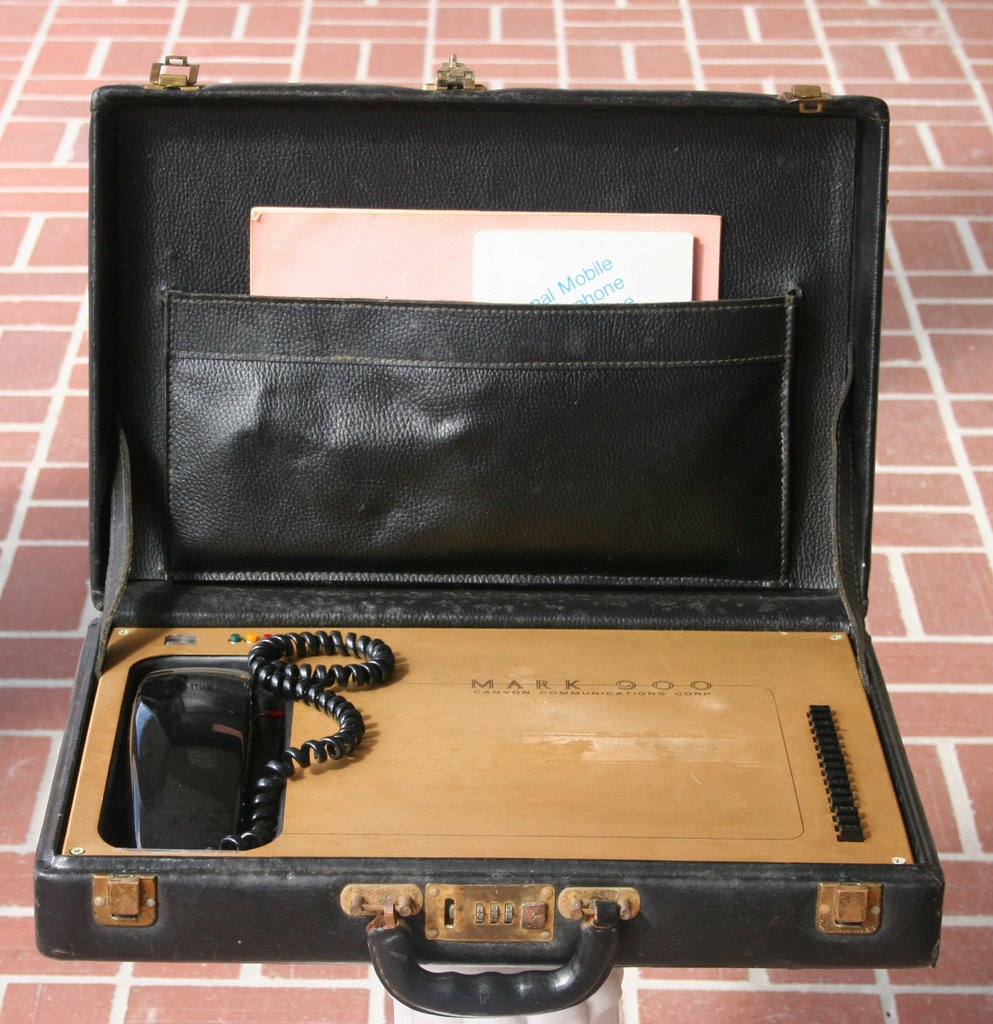
(Roger's third Mobile Telephone acquired 1972)

Jimmy's favorite exhibit was a mobile telephone scenario by Bell Telephone. When a button was pushed, a huge map display of a rural community would light up the roads with blinking lights. The deep voice coming from the speakers would begin telling the story of Doctor Morgan, MD and an emergency that was called into his office. Since the doctor was out of the office making house calls, the nurse had to call him on his mobile phone. The little lights on the display begin radiating out to his car like radio waves. The doctor answered his mobile phone and was able to get to the emergency in five minutes. He saved a life thanks to a new technological marvel called the Mobile Telephone. It was a great fantasy for the future and Jimmy loved it. His grandfather instilled in him a fascination with gadgets and with the way things work.

The second appointment we had in San Francisco was an interview with KFOG radio. It is one the few radio stations still left that isn't being programmed by a strange computer somewhere and puppeteers in suits pulling the strings. Hopefully a recent change in ownership won't change the heart of the station.

In the spring of 1956, Jimmy was excited about a new gadget he had received from his grandfather for Christmas, a Regency TR-1 transistor radio. He would put it in his pocket, turn it up loud and ride his bicycle. His mother had told him not to ride his bike on the streets, so he obeyed the letter of her command and stayed off the streets. The Outer Drive was not technically a street, it was a busy highway! Consequently he spent many happy hours on the Outer Drive dodging the traffic on his bike.


(1987 Roger & George with the RIC that started the FOLK ROCK sound. Photo by Camilla)

It was during one of those happy hours that he first heard the sounds of Elvis Presley singing "Heartbreak Hotel" coming in over the radio waves to his transistor radio. It was that sound that put Jimmy on the pathway of his life. He begged for a guitar for his 14th birthday and was given a Harmony 6-string. He searched the airwaves and record stores for more of that rock-a-billy sound and found a record by Gene Vincent. The first guitar lick, which he taught himself by listening to a record, was the lead break from the flip side of the single "Be Bop A Lula", a song called "Woman Love." Years later when he and George Harrison were comparing their adventures in music, they realized that the first thing they had both learned on the guitar was the "Woman Love" guitar break and they learned it at the same time.

In 1964, the BYRDS went to see "A Hard Days Night." Roger saw George playing a red 12-string Rickenbacker and decided trade in his acoustic 12-string for a Rickenbacker 12-string.


(Regency TR-1 transistor radio)


Roger now has a collection of transistor radios that he has acquired over the years while touring. Some were gifts from friends and fans. You can view the collection at http://www.ibiblio.org/jimmy/Radio/Radios/

Our third commitment was to the Glaucoma Research Foundation. http://www.glaucoma.org/living/
Six years ago during a routine eye examine, Roger was diagnosed with glaucoma. This is an insidious affliction. There are no symptoms and if it is not detected, you will go blind and there is no cure. The progression of the blindness can be stopped and there is research being done to find a cure. Roger was a keynote speaker for the Catalyst For A Cure campaign. His personal experience emphasized the need for testing and the need for research for a cure. Time is of the essence in glaucoma research. While everyone, from infants to seniors, is at risk, those past the age of 40 are most vulnerable. With an aging population, we are on the verge of an epidemic of blindness. Further, glaucoma is the leading cause of blindness in African-American and Hispanic/Latino populations – striking at an earlier age, and proceeding more quickly. There isn't a moment to lose. If you have any questions about Glaucoma, call (800) 826-6693.

After the fund-raiser, we were faced with a dilemma. Hurricane Katrina made us rethink our plans for going home to work on "THE FOLK DEN PROJECT." We didn't want to tax the infrastructures of the southern states by driving through their towns and highways, so we decided to stay in the west until Roger's concert in Denver on September 24.

We had all the equipment and the songs for "THE FOLK DEN PROJECT" but we needed a good sound system in order to finish the mixing and mastering. I emailed friends in Denver who had a studio, but Kristy emailed back and said that Ed had sold his studio. She invited us to use the studio where Ed was now producing his projects and to even stay in the owner's house. We were a little nervous about invading someone's home for over a week, but she assured us that we were welcome. We slowly and prayerfully drove to Denver.

(On the way to Colorado. Photo by Camilla)

When we arrived in Parker Colorado at Summit Road Studios and the home of Don and Linda DeBey, it took us only a few moments to recognize that this generous couple were about to become very special friends.

(Summit Road Studios grounds. Photo by Camilla)

Sunday, October 02, 2005

Roadie Report 10 (Aug cont. The King Estates Vineyard & Roger Meets Camilla) by Camilla McGuinn


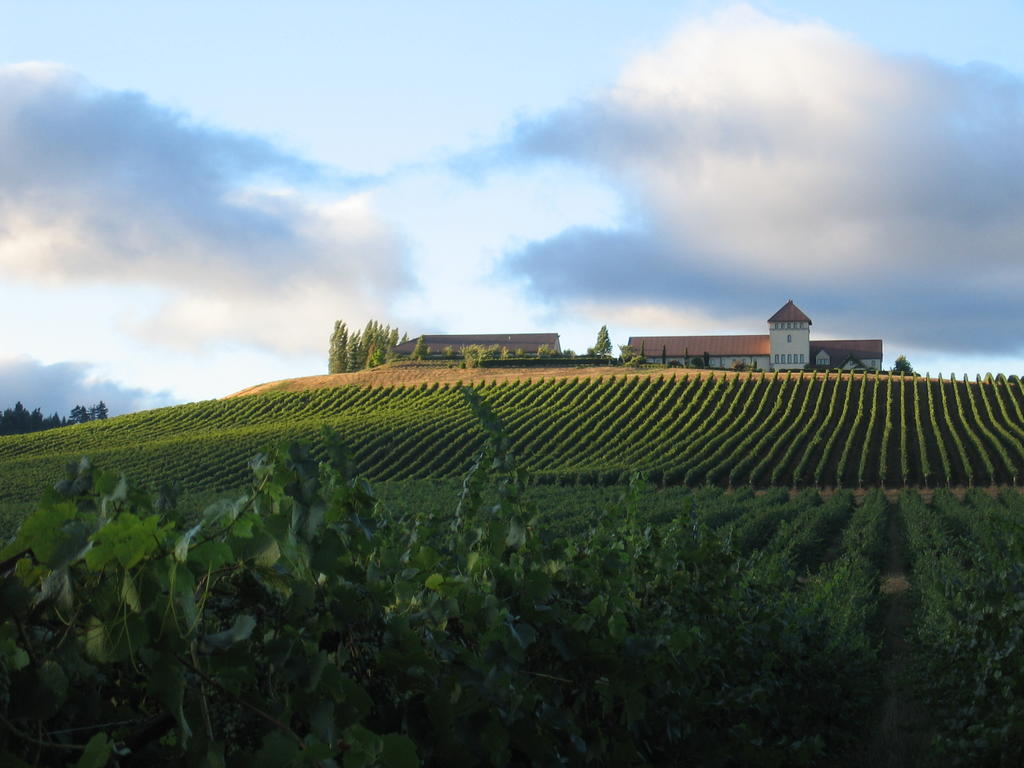
(The view of the vineyard from the cottage. Photo by Camilla McGuinn)


We drove through the gates of the King Estates Vineyard just as the sun was casting its evening shadows on the grapevines. The guest cottage is located between a pond, rows of vines and just down the hill from the winery which was built in the style of a traditional French Chateau. This was the third time that the King family had invited us to seek sanctuary at their lovely vineyard southwest of Eugene, Oregon.

Roger wrote about Ed King, Jr. in a previous blog. Mr. King built and planted this vineyard with his son Ed King III.

We had met Steve, the Director of Sales of the King Estates, at a wine tasting in Orlando a few years ago. The King Estates table was the first one we stopped at to sample the wines. The King Estates Pinot Gris and the genuine friendliness of Steve Thomson caused us to circle quickly back to King Estates' table. In the course of the evening, we mentioned that Roger was a musician and we exchanged email addresses. That night, when Steve got back to his hotel room, he called his wife Karen and mentioned to her about meeting a musician named Roger McGuinn. Karen knows more about music than Jann Wenner of Rolling Stone and was horrified that Steve didn’t recognize the name McGuinn. He emailed us the next day with sincere apologies.

I told Steve that I identified with his innocence of rock and roll history and told him my story.

In 1978, I began studying at an actor’s workshop in Beverly Hills, California on the same night that a quiet man with shoulder length hair joined the class. The teacher, Tracy Roberts, paired me with this man. I had just finished a 7-UP commercial and decided to quit my job and concentrate exclusively on acting. I wanted to work with someone who was serious about this class, so I asked the quiet man if he had ever worked professionally. He told me that he had been in Bob Dylan’s movie “Renaldo and Clara.’ I inwardly groaned, “ Oh no…he’s a musician.”

The scene we were assigned to study was from the movie “Blume in Love.” We coordinated our schedules to meet in two days to discuss the scene, then said good night and walked out to our cars. I noticed his California license plate was “BYRDS2.”

My friend, Gregg, who was doing his medical internship on the East Coast, called me the next morning. I told him about my new acting workshop and about this guy I'd met. I'd figured that the guy was a BYRDS manager or attorney because if he had been in the BYRDS wouldn’t he have had just BYRDS on his license plates? I didn’t have a clue as to how people applied for special name license plates. Gregg asked me his name and when I said Roger McGuinn, Gregg said, “Camilla, he was the BYRDS!”

Roger and I studied the scene together and then, love did bloom.We were married two months later on April 1, 1978.

We laughed with Steve about our mutual lack of rock history and a friendship developed. He began to keep track of our schedule through mcguinn.com on the internet. When he saw that we were coming to Oregon, an invitation was offered to stay at the cottage on the vineyard that was available to the distributors of the King Estate wines.
(The cottage. Photo by Camilla)


The cottage reminds me of one from storybook land and walking into it for the third time was like coming home.

The morning after we arrived, Steve took us on a tour of the vineyard. So much had developed since our last visit to the vineyard. The Chateau is being extended to include a restaurant and conference center. We have enjoyed the Chef’s fare of the vineyard and realizing that there will be a wonderful place for visitors to feast on gourmet delights, sip wine and gaze on the view from the chateau patio brought a laugh of delight to our conversation.

(One of the views from the Winery.Photo by Camilla)

There is going to be a farmer’s market on premise with only organic produce sold and a brewery is in the works. The King Estates Vineyard is now a certified organic dry vineyard. A dry vineyard is one that is not irrigated because careful planting of the vines make it possible for the fruit to flourish with the natural rainfall.

We had lunch with Ed King III, Steve, Karen, Justin King and his lady, Kari. The King family is fascinating. Ed King III guided the vineyard into organic farming. Justin King, Ed’s son, is an amazing guitar player who has just signed with EPIC records and Justin’s lady is the pastry chef for the vineyard. It is not only entertaining but also humbling to enjoy a meal with so much talent.After an incredible meal prepared by the chef who will be overseeing the new restaurant, we all said our good-byes. Ed gave us a DVD to watch in the cottage called “My Father’s Garden.”

Roger and I asked if it would be okay to walk through the vineyard back to the cottage because I wanted to take some pictures. Walking through an organic vineyard is a delight. There is no trepidation about inhaling or touching chemicals.


(A garden at the King Estates. Photo by Camilla)

That afternoon, we watched ‘My Father’s Garden.” It is a true story narrated by the filmmaker about her father’s orange orchard. In between the story of her father, she interjects stories about other farmers. Some of them were losing their farms but one of them made a bold move and turned his family farm to organic farming. The story was hopeful and heartbreaking.

The heartbreak: one dear elderly farmer broke into tears as his farm was being auctioned. All he ever wanted to do was to be a farmer but the cost and degradation of chemical farming had broken his dream. The filmmaker’s father, the focus of her story, died at a young age. His body just shut down. She has a poignant ending to her film with a picture of her father standing next to the spray of a chemical pest sprayer.

The hope: the organic farmer had not only turned his farm into a profitable endeavor but he had saved his soil from chemical ruin.

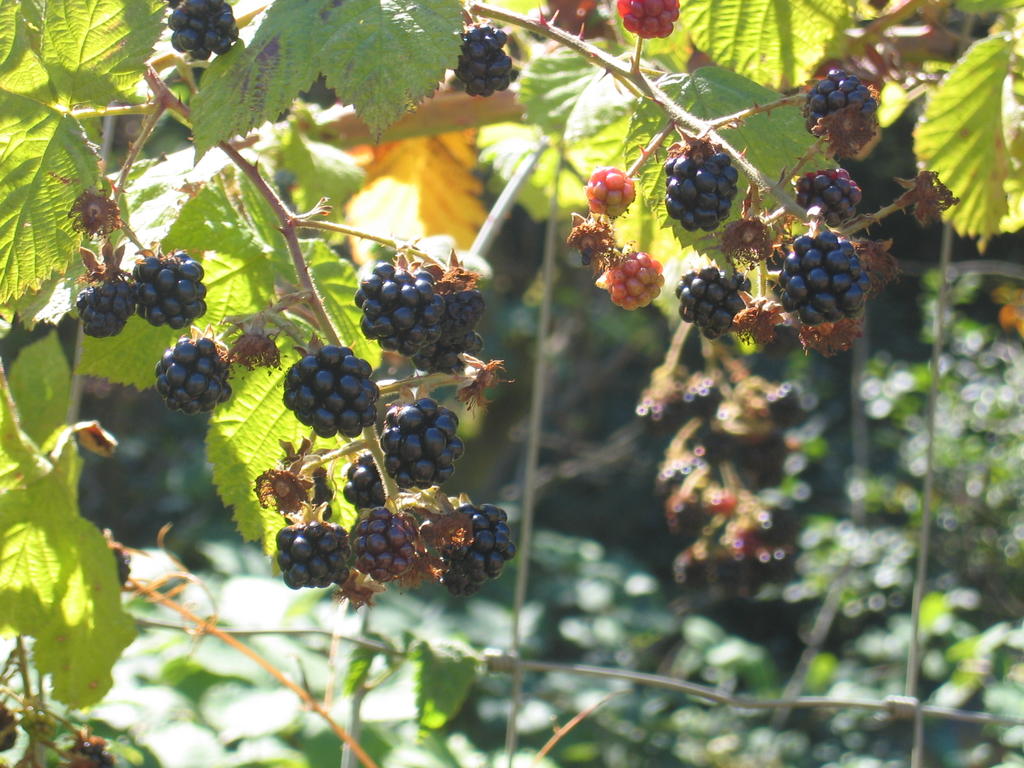
I quietly strolled out of the cottage after watching the movie and walked around the vineyard. I cried for a while thinking about the movie. I cried for the old farmer and I cried for the soil on which he toiled. At the edge of the vineyard was a fence covered with wild berries. They were the same variety of berries that my brother and I picked when I was 7 years old. He used to yell at me to stop eating them because we wouldn't have enough to sell to the neighbors for a quarter a quart. I looked at the wild vine filled with berries and then back at the organic vineyard. I picked a berry and ate it, and then I picked some more and ate them. They were growing in a healthy place and I could eat them off the vine.

(The Wild Berries before I ate them.)


I captured the berries in the lens of my camera as I enjoyed their sweetness. There is a Psalm that tells us that God gave us wine to make the heart glad and I think Oregon has been blessed with the King Estates to make the earth glad.

Email: roadiereport@folkden.com

Saturday, September 17, 2005

Roadie Report 9 (Aug cont. & Jacques Levy) by Camilla McGuinn

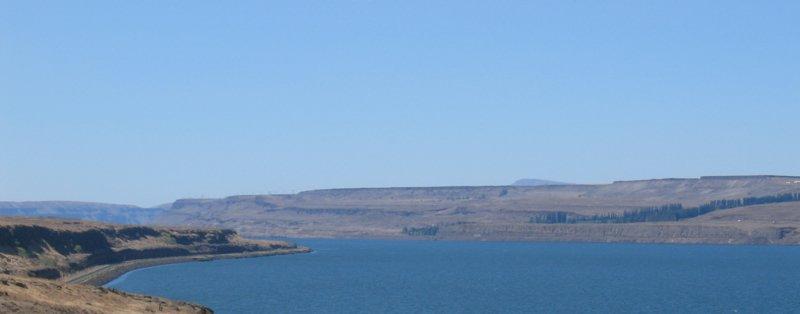
The Columbia River (Photo by Camilla McGuinn)

We left Moses Lake early in the morning on August 28th. Our route on Interstate 84 would take us along the Columbia River. We could have spent days exploring the historic Columbia River Gorge but we wanted to reach the King Estates Vineyard in Eugene, Oregon before nightfall.

I hadn’t heard the news for days, so I turned on the radio. A reporter was interviewing a person in New Orleans who wasn’t going to evacuate even though Hurricane Katrina, a possible category 5 storm, was headed their way.

We are very familiar with hurricanes. Last year our city was hit three times. While listening to the Katrina news, memories of the last hurricane to pass over our home came flooding back.

On Thursday, September 3, 2004, I was sitting in my office when the telephone rang. A quick glance at the caller ID told me something was wrong. The name was Levy, and even though Jacques Levy and his family were dear friends, we seldom called each other. We usually just surprised them when we were in New York City at their SOHO loft.
I picked up the receiver and recognized Claudia’s soft voice. I asked her what was wrong. She told me Jacques was dying.

Roger had met Jacques Levy in 1967. Jacques sent a pretty blonde girl backstage at a BYRDS' concert to ask Roger if he would like to write the music with him for a Broadway play. Jacques figured correctly that the pretty lady would have a better chance of meeting Roger than he would. Jacques was a clinical psychologist turned Broadway producer and he and Roger became not only writing partners, but also close friends.

They were together writing songs when Martin Luther King was shot, the night Robert Kennedy was shot and when the first man walked on the moon. They also wrote songs on and about Bob Dylan’s “The Rolling Thunder Revue”

The news of Jacques imminent leaving this earth hit us like a ton of bricks. We had not known of the lung cancer that Jacques had been battling with for over a year. I told Claudia that we would be in New York City soon. We were scheduled to be in the area for two concerts, but we decided to leave earlier so we could be with the Levy family.

Our original plan had been to leave on Sunday, but Hurricane Jeanne was knocking at our door and was scheduled to hit Orlando on that day. A reporter was flying in on Friday night from London for an interview with Roger. It was that commitment that kept us in Orlando until Saturday at noon. We were praying that we were making the right decisions for everyone involved.

We hit the road and decided to take the inland route because of the weather. The first night we got to Tifton, GA. The next morning we awoke early in order to beat the storm’s northward path. We made it to Virginia. The storm hit the Georgia area we had been in with a lot of flooding.

Monday night we arrive in Weehauken, NJ. As soon as we checked in we called Claudia. They had moved Jacques from the care of Hospice in their home to the hospital. She wasn’t sure if he could see anyone. Later I talked to Maya, their daughter, and asked if it would be possible for Roger to visit Jacques and quietly sing to him the songs that they had written together. Maya said she would ask her mother and the hospital.

Late Tuesday night Maya called and said that everyone thought it was a good idea for Roger to come to the hospital and sing. I told her we would be there Thursday. Roger had a concert in Paramus on Wednesday.

On September 30 we arrived at the intensive care unit of the hospital around 1 p.m. The ICU had eight separate cubicles which were open to the nurses’ station. Jacques was in the first one by the door. He was unconscious, breathing with the help of a respirator. There was no one with him. Roger sat down by his bed, took his 6-string guitar out of the case and started softly singing “Chestnut Mare.”

I stood behind Roger at the entrance to the cubicle. Halfway through the song, Maya walked down the hall. Jacques' beautiful adult daughter greeted me with the longest hug. She went into the room and sat next to Roger. Then Julien, Jacques' sixteen year old son, came slowly walking down the hall with his eyes focused on the floor. He had grown so much since the last time we had seen him.

Julien stood at the entrance with me and we all watched Jacques’ face as Roger sang. We could see faint smiles and when Roger sang, “I Want to Grow Up To Be a Politician,” the corner of Jacques’ mouth turned upward. His sense of humor was intact.

Claudia had been talking to the doctor. It was time to remove the respirator. It was time to let Jacques go.

They took Jacques off the respirator and woke him up, so everyone could say goodbye. He let his family know that he had heard Roger singing. Jacques couldn’t talk but they had figured out ways to communicate.

Roger continued to sing and play until his fingers hurt. He said it was very hard not to cry, but if he cried he couldn’t sing.

Close friends came to the hospital. Roger had a few minutes alone with Jacques. He held Jacques’ left hand and told him he loved him. They made eye contact and even though Jacques couldn’t speak, his eyes lit up with agape love. Roger came away from the hospital with a positive feeling about Jacques’ journey through eternity. It was a peace that surpassed all understanding.

We returned to our hotel in New Jersey on the ferry. We were staying at a hotel on the Hudson river and our room had a view of Manhattan.

Jacques had passed away. The emotions of the day had wearied us, so we had a light supper in the room. After eating we stood looking at the New York City skyline. A full moon shimmered in the sky and then suddenly, a cluster of five silver balloons appeared drifting toward the heavens in the trail of the moonlight. I smiled at Roger and said, “Look at those balloons drifting to the moon. It’s like Jacques is going to heaven.” Roger said that was exactly what he was thinking.

That night, standing quietly looking at the city where he had worked, lived and loved, we said our earthly farewell to Jacques Levy.

The next night, Roger had a concert in Huntington, NY. He told stories about Jacques and sang most of the songs they wrote together. Jacques Levy will always be alive in Roger’s music.

Saturday, September 10, 2005

Roadie Report 8 (Aug cont. & Jim McGuinn Meets Peter Fonda) by Camilla McGuinn

August 2005 Tour (cont.)

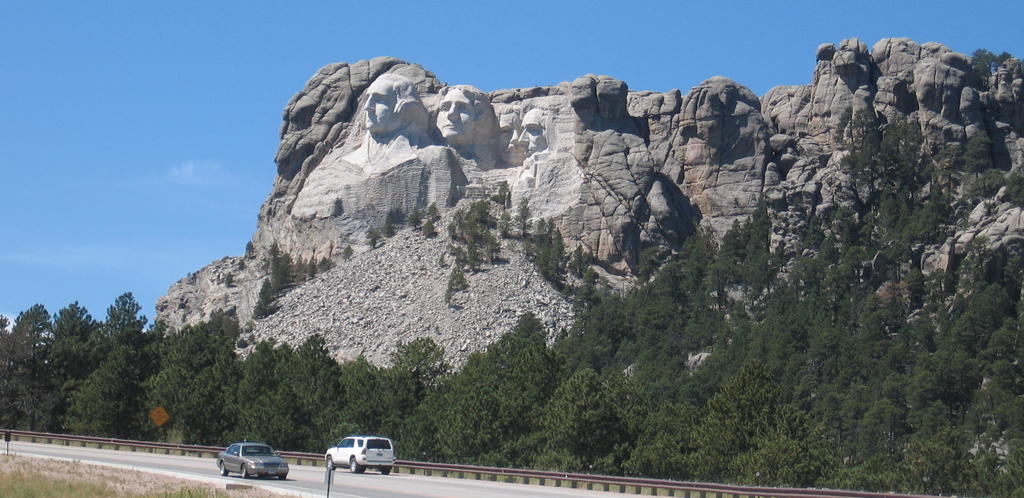
I asked Roger if he ever stopped at Mount Rushmore. He hadn’t and neither had I, so now was the once in a lifetime opportunity to view a historical site that we should have seen when we were ten years old. Besides vague memories of a teacher trying to impress upon us the importance of a monument carved on the side of a mountain, our recollection of the Mount was totally connected to Alfred Hitchcock’s “North by Northwest.” I was sure that the faces of the four presidents were going to be huge. They had to be because Cary Grant spent a lot of time crawling around those faces in Hitchcock’s movie.

(Photo by Camilla)


At our first glimpse of the four faces we simultaneously shouted, “It’s small!” We said the same thing when we first saw the White House in Washington, DC. Our media has a way of really blowing things out of proportion.

The only charge to view the monument up close is the $8 parking fee. There is the normal gift shop, feeding stations, an amphitheater and a walking path around the mountain. We passed by different groups of tourists each speaking a different language. I wondered if they were wondering why those faces were carved on that mountain because that was what I was wondering. I obviously didn’t pay attention to my teacher in elementary school. The answers were available in the gift shop and of course you can always “google it.”

We spent about 30 minutes looking at the faces of granite and at the faces of those looking at the faces of granite. Every face has a history.

We drove down the mountain and continued to Washington, stopping for the night in Gillette, Wyoming. As we crossed the border into Montana, Roger talked about Peter Fonda and how Peter had traded his sailboat “Tatoosh” for the Big Sky country.

The first time Roger met Peter Fonda was in Las Vegas,1962, when Roger was accompanying Bobby Darin. Peter came to watch the show with Sandra Dee, Bobby's wife. They had just finished filming “Tammy and the Doctor."
Peter knew about Jim (Roger) McGuinn because he was a friend of Stormy MacDonald, a childhood pal of Jim’s from Chicago. When the BYRDS hit the Sunset scene in Hollywood, Peter was there and arranged to have the group play for his sister Jane’s birthday party. Henry Fonda was not fond of the loud music and told Peter to have them lower the volume. Peter tried to explain to his father that this was THE BYRDS but Henry didn’t care what they were, he just wanted them to be quiet.

David Crosby and Jim loved airplanes and would often go to Aviation Boulevard at LAX to watch the planes land. It is that place where Peter filmed an opening scene in the movie “Easy Rider.”

One day the BYRDS missed their flight to Pensacola, so they chartered a Lear Jet to get them to the gig on time. The pilot was John Lear, son of Bill Lear, the inventor of the Lear Jet. That was the beginning of a friendship between, John, Jim and David. Peter later joined them in their flight adventures. Jim even wrote a song called “The LEAR JET SONG” and was rewarded with free Lear Jet rides.

We spent the night in Missoula and arrived in Moses Lake in time for lunch the next day. The trip from Orlando, Florida took 5½ days.

Sunset at Moses Lake(Photo by Camilla)

Moses Lake is a small town with a great sense of community. Roger was playing at an outdoor amphitheater located on a river. Every year the town brings in artists for free summer concerts. The audience, on the cool August night, was a mixture from the whole town, young and old. At my lemonade stand, I was touched to talk to people who had driven for hours to see Roger in concert. I even drafted one of the fans to man the lemonade stand while I set the stage for the show. Fans become friends in a twinkling of the eye.

Tuesday, September 06, 2005

Techie Report - 3- By Roger McGuinn

While in Eugene Oregon we stayed at the King Estates Winery. Director of Sales, Steve Thomson loaned me a book about the founder Ed King Jr. Ed was a friend of Bill Lear, the inventor of the Lear Jet. He told some amazing flying stories. One aviator friend of Ed's ran out of fuel but was able to land his Lear Jet "dead stick" that is without power from over 50 miles away from the airport.

Mr. King was an active pilot for forty years and flew his own jet until age 71. He is very proud to have assisted the Rutan Brothers in accomplishing their dream of circumnavigating the globe by airplane on one tank of fuel. Using King's products exclusively for navigation, flight control and communication, their Voyager aircraft flew around the globe on one tank of fuel in 1986. The King name is proudly emblazoned on the side of the Voyager which now hangs in the Smithsonian Air and Space Museum in Washington, D.C.


(Ed King Jr. hand testing his radios)


The King Story

Someone once said that the greatest inventions come from creative, free thinkers who haven't been told that "it couldn't be done" by experts. In a way, this is how King Radio Corporation was born. In 1952 Ed King Jr. fulfilled a lifelong desire by earning his private pilot's license. However, for King a 1943 Kansas State University graduate in electronic engineering, was only the beginning of an interest in aviation that would eventually lead to King Radio Corporation.

Ed, who owned and flew a Beechcraft Bonanza for pleasure, quickly became dissatisfied with the poor quality radio gear offered to the private pilot in the early to mid-50s. The best selling NAV/COMM on the market at that time offered a continuously tuned receiver and only 27 transmit channels, and still priced well over $1000. King knew there had to be a way to build a low cost NAV/COMM that offered the same optional features that the expensive airline equipment provided. However, as a president of his own highly successful electronics company, Communications Accessories Corporation, he just didn't have the time to do anything about it, so it took a back seat to other business interests.

Finally, in 1956 Ed sold Communications Accessories Corporation to Collins Radio and agreed to stay on and manage the company. Between 1956 and 1959 king tried to interest Collins in light aircraft avionics designed with some of the same features as the expensive airline equipment. However, Collins was heavily involved in the growing airline business and couldn't spare the time or manpower to pursue the light aircraft avionics products.

As a result, in 1959 Ed King left Communications Accessories Corporation and formed King Radio Corporation where he designed and handmade the first low cost 90 channel crystal controlled VHF transceiver for light aircraft. That same year he sold five units to private customers for $845 each. Since his model had a lower price and far better performance than comparable radios of its day, Ed had no trouble finding customers and well established agents willing to sell and service his product so Ed set up for "mass" production in an old dairy farmhouse on the outskirts of Kansas City, with production and shipping on the ground floor, engineering and testing on the second floor, and service parts in the attic.

In February 1960, King had 30 employees and production was on the rise. By 1961, King Radio Corporation had moved out of the farmhouse to a plant in Olathe, Kansas, and continued to climb to become a major factor in the light aircraft avionics field. The KY 90 VHF COMM Transceiver soon had the reputation of providing crystal clear communications, and was installed in almost every type of American-made light aircraft, including such famous aircraft builders as Cessna, Piper and Beachcraft. With the success of the KY 90, King quickly introduced compatible navigation receivers and was soon able to offer a complete line of Navigation/Communication.

The creative atmosphere at King Radio has yielded many important firsts. King brought the first all solid-state transceiver for airline use to the market in 1966, the KTR 900: the first digital ADF for general aviation, the KDF 800, in 1969; and the first low cost all solid-state TSO'd VHF NAV/COMM unit, the KX 175, in 1970. The company also pioneered the use of digital frequency synthesizers which replaced bulky crystal banks in NAV/COMM units and allowed the widespread use of 720/200 channel NAV/COMM's in general aviation. King has led the industry in the design of Large Scale Circuits (LSI chips), small chips about 3/32" square which do the same work of literally hundreds of transistors. The subsequent use of LSI technology in various systems has resulted in a significant operational and cost break-through while reducing the size and weight and increasing the reliability of new avionics systems.

In the process of striving to respond to more needs of general aviation and the airlines, King has experienced rapid growth in its 25 years since Ed King hand-built the first King radio. It is estimated that King has invested more in research and development for general aviation electronics than any other company in the industry. While sales were continually increasing, King enlarged its manufacturing facilities in Kansas, Its present headquarters in Olathe, Kansas, plus a facility at nearby Johnson County Industrial Airport and plants in three other cities in Kansas, occupy a total of 557,000 sq. ft. of space. Employment has increased from 30 in 1960 to 2,850 in 1984.

As growth in the general aviation industry began to level off, King embarked on a bold diversification plan. This began with the formation of King Marine Radio Corporation in Clearwater, Florida. From its inception in late 1981, King Marine has grown steadily to establish a firm position in the competitive marine electronics market. In addition, King began an aggressive plan to penetrate the military avionics field. The high value of King products and the strong engineering and technical base were responsible for a number of military contracts, and today military avionics make up an increasingly larger portion of King business.

During this exciting period of growth and diversification, the avionics product lines were constantly being upgraded with the latest technology. In addition, new products were added, bringing King quality to an ever increasing number of light, commercial, and military aircraft. Today King Radio produces a full range of avionics products, including Communication Transceivers, Navigation Receivers, Automatic Direction Finders, Autopilots, Flight Directors, Airborne Radiotelephones, Air Traffic Control Transponders, Compass and Weather Radar Systems. The company's Silver Crown product line is in its fourth generation and is used in light aircraft while the Gold Crown III product line is in its third generation and is designed for turboprops and business jets. In addition, King also produces five products for commercial airlines. These products are currently being used by more than 141 of the world's leading air carriers.

Each year King Radio has improved the high technology base that supports its diverse product offerings. In 1981 a CAD/CAM computer aided design and manufacturing system was added. This system allows King to develop new products quickly and efficiently. The latest in automatic test and manufacturing equipment was purchased regularly, maintaining King's leadership position in manufacturing technology creates a very fertile environment for new product innovation and assures a promising future for King Radio.

In 1982 a Mobile Communications Division was formed to develop a product line for the rapidly expanding Land Mobile Radio field. A team of top professionals was recruited from the industry to utilize King Radio's high technology base for a bold new line of microprocessor based two-way radios.

The King Mobile Division is housed in a 76,000 sq. ft. facility on a 57 acre tract in Lawrence, Kansas. From this facility will evolve the base for all engineering, marketing and manufacturing efforts.

As is typical of most King innovations, these new mobile handheld portable communications units will bring the very latest in features and technology (frequency synthesizers, keyboard programming, channel scanning, liquid crystal displays) down from the highest price levels into the low-to-medium cost range.

When complete, the line will comprise a full range of mobile units, the base stations and portables, in both VHF and UHF to assemble a complete mobile dispatch system using King Land Mobile equipment exclusively.

The use of advanced C-MOS micro-processor design and automated surface -mount component manufacturing techniques will not only enable King to produce a radio that is smaller, lighter and more reliable than other units on the market today, it also affords some rather significant production economies that can be passed on in the form of lower pricing.

In 1983, King Radio opened a 24,000 sq. ft. engineering and manufacturing facility in Singapore. This facility is presently engaged in major sub-contract work, along with the manufacture of VHF 7000 Transceiver and King 8001 Loran C for the marine market. They presently employ 175.

One has to wonder how a company like King Radio could have flourished amid huge conglomerates with almost unlimited resources. The answer is simple--Ed King and his ability to surround himself with employees possessing the same insatiable desire for excellence. Ed has always seen technological achievement and improved used benefits at reasonable cost as the challenge. According to Ed, "If you have highly innovative, reliable products at competitive prices, a lot of your marketing problems are solved."


(Photo By Camilla McGuinn)


We went from Oregon down through California Wine Country (more in Camilla's Roadie Report) and got to San Francisco just in time to appear on the first live TWIT podcast.

TWIT Podcast No. 21.

I talked about my amazing Samson C01U USB condenser mic, recording on my iBook using Audacity the cross platform audio editor, and many other tech related subjects.